
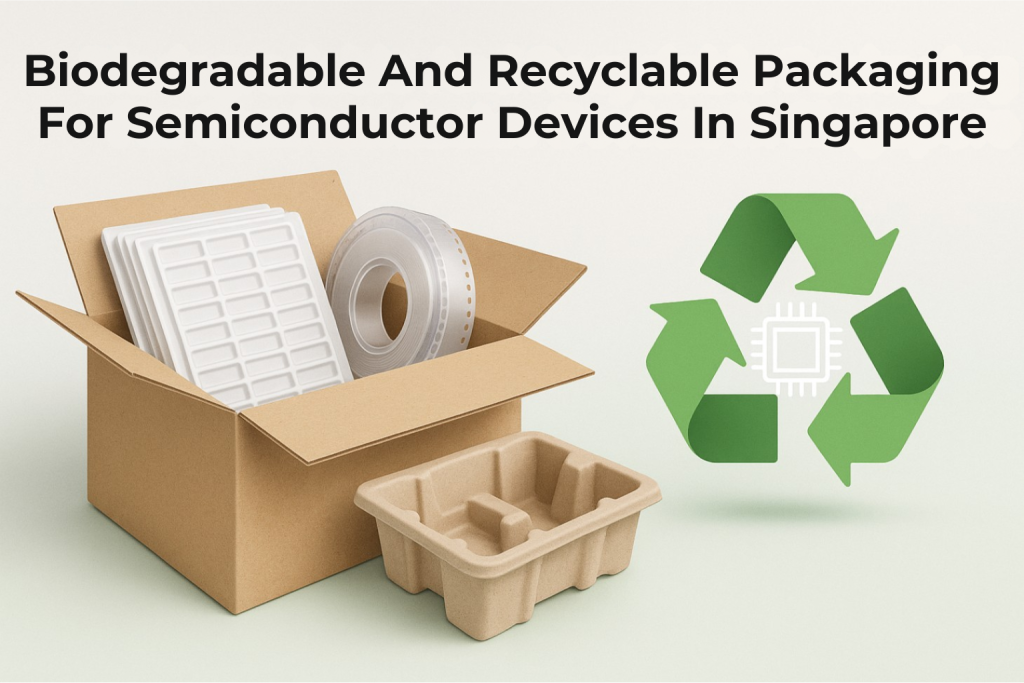
If you are searching for biodegradable and recyclable packaging for semiconductor devices in Singapore, you are probably trying to do two things at once: protect sensitive devices reliably, and reduce packaging waste in a way you can actually defend in audits, customer reviews, and internal reporting.
The practical truth is that “eco packaging” for semiconductors is rarely one magic material swap. It is a pack-out system, built around how your devices move through production, storage, and shipping. The good news is that you can make meaningful improvements without gambling on protection, especially when you start with the right base format and tighten everything around it.
This guide stays tightly aligned to what SuperPak supports, including thermoformed products, tape-and-reel packaging, moulded pulp, carton boxes, expanded polyethene foam, product development (design and simulation), kitting, and collection for recycling and washing.
How To Choose Biodegradable And Recyclable Packaging For Semiconductor Devices in Singapore Without Increasing Risk
Most teams get stuck because “biodegradable” and “recyclable” sound like they should apply to every layer of the pack-out. In semiconductor packaging, this often creates problems because the device-contact layer is where you need the most consistency.
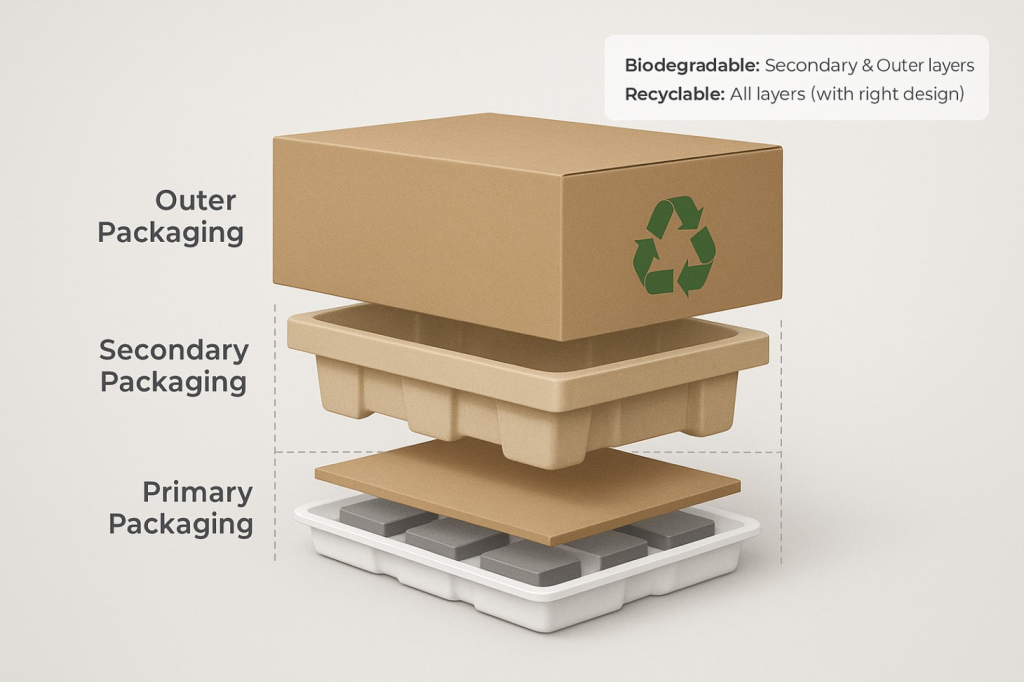
A safer, more scalable approach is to treat packaging in layers.
Your primary packaging is what directly holds and presents the device (for example, trays or tape-and-reel). Your secondary packaging stabilises the primary packaging (inserts, dividers, cushioning). Your outer packaging is the shipper carton and unitisation.
In practice, biodegradable materials tend to fit best in the secondary and outer layers, where fibre-based formats can replace some plastics without changing how the device is held, handled, or fed into processes. Recyclable improvements can happen across all layers, but usually through standardisation, right-sizing, and reuse loops rather than bold material claims.
What “Biodegradable” Really Means For Semiconductor Packaging Decisions
Biodegradable materials are attractive because they signal lower long-term waste impact. The risk is that people try to push biodegradable materials into roles where the packaging must behave perfectly under handling, stacking, or controlled environments.
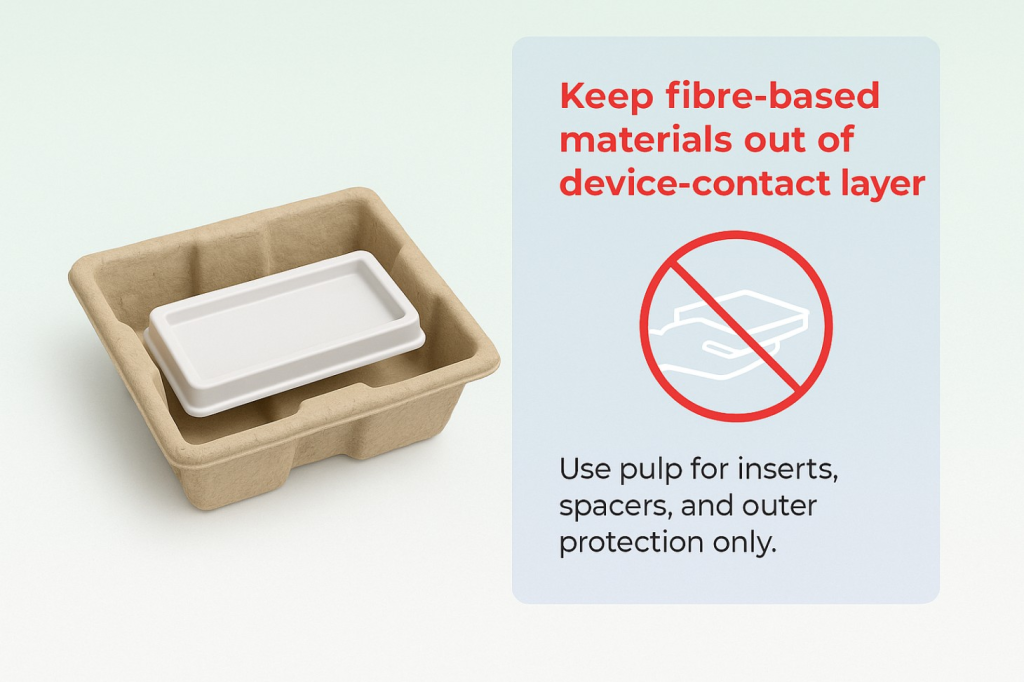
A more realistic plan is to use biodegradable or fibre-based packaging, where it does not introduce performance uncertainty. That usually means using moulded pulp inserts or fibre-based cartons where they are protecting the tray or reel box, rather than being the device-contact structure.
SuperPak’s moulded pulp service describes paper pulp trays made from recycled paperboard or post-consumer newspapers, commonly used for protective packaging, including electronics. That makes moulded pulp a practical candidate for secondary protection and outer stabilisation, as long as it fits your cleanliness and handling requirements.
If you have clean handling constraints, you also need to place fibre materials carefully. SuperPak’s cleanroom packaging guidance emphasises that packaging components should be scrutinised for particulate generation and electrostatic behaviour in cleanroom contexts, and it discusses the use of low-particulate films and practices like double-bagging for contamination control. The takeaway is not “never use pulp.” The takeaway is “use pulp in the right layer, and do not break your clean handling logic.”
What “Recyclable” Means When You Want Results, Not Labels
Recyclability is not just a material property. It is a pathway.
A packaging component can be theoretically recyclable, but still end up as waste if it is mixed with other materials, contaminated, or not collected in your real operational flow. That is why many semiconductor packaging programmes get better outcomes by combining three levers:
- Reduce material by improving fit and right-sizing.
- Simplify material mixes so sorting is easier.
- Reuse where return logistics make sense.
This is also where SuperPak’s scope matters, because they not only list packaging formats. They also list services that help you execute consistently, including product development work and collection and washing.
Which Primary Packaging Format Should You Use, And How Does It Affect Sustainability?
SuperPak supports both thermoformed trays and tape-and-reel packaging, so the smartest starting point is choosing the right primary format for the device family and downstream process.
When thermoformed trays are the right base for your devices
Thermoformed trays are often the best base when you need precision fit, consistent presentation, and predictable stacking. SuperPak’s thermoformed tray content describes thermoforming as heating a plastic sheet, shaping it over a mould, cooling it, and then trimming or finishing the tray, including options like die cutting or CNC machining.
From a sustainability perspective, trays usually improve “recyclable packaging” outcomes through better design control. When the tray fits properly, you reduce movement, which means you can remove filler. When trays stack properly, you can reduce carton size and ship more efficiently.
If you are already using trays but feel like your pack-out is slowly getting bulkier over time, ask SuperPak for a quick fit and pack-out review. A small tray geometry change often removes more secondary packaging than any single material swap.
When tape-and-reel is the better base
Tape-and-reel is often the natural choice when you want automated presentation, standardised handling, and controlled component positioning. SuperPak describes tape-and-reel as loading components into carrier tape pockets, sealing with cover tape (by heat or pressure), winding onto a reel, and placing the reel in a reel box for shipment.
SuperPak also notes in-house capability for part fit and cross-section analysis for carrier tape, and that cover tape compatibility and ageing tests can be performed if needed. This matters because tape-and-reel “sustainability” is not only about the tape. It is also about avoiding rework, rejects, and repacks caused by poor fit or poor sealing behaviour.
Tape-and-reel sustainability gains typically come from tightening the outer system: right-sized reel boxes, right-sized shippers, fewer mixed protective layers, and stable packing methods that do not invite last-minute extra cushioning.
Where Biodegradable And Fibre-Based Packaging Fits Best In A Semiconductor Pack-Out
Moulded pulp and fibre-based cartons usually shine when they stabilise and protect the primary packaging, not when they replace it.
SuperPak’s moulded pulp service describes the material and its use for protective packaging across industries, including electronics. In a semiconductor pack-out, that most naturally maps to roles such as tray spacers, corner protection, interlayer supports, or inserts that lock a reel box in place inside a shipper.
When teams fail with pulp-based packaging, it is usually because the design is vague. The insert shape is too generic, so people add extra padding. Or the carton is oversized, so the pulp insert is doing more work than it should. A well-designed pulp insert should reduce the need for additional materials, not become a new layer on top of existing ones.
How To Reduce Packaging Waste Through Design Instead Of Adding “Eco Layers”
If you want the biggest reduction with the lowest risk, focus on design and standardisation. SuperPak explicitly offers Design Centre services and Part fit analysis and simulation testing, including the use of simulation tools to ensure accurate fit and functionality and minimise errors.
They also describe carton box testing methods such as compression testing, bursting strength, and edge crush testing as part of their testing approach. These are exactly the sorts of capabilities that support “recyclable packaging” programmes, because you can reduce material with confidence when performance is verified.
Here is the simple logic most high-performing packaging programmes follow:
You first remove movement by improving fit. Then you remove air by right-sizing. Then you simplify materials so recycling is realistic. Only after that do you explore deeper material substitutions.
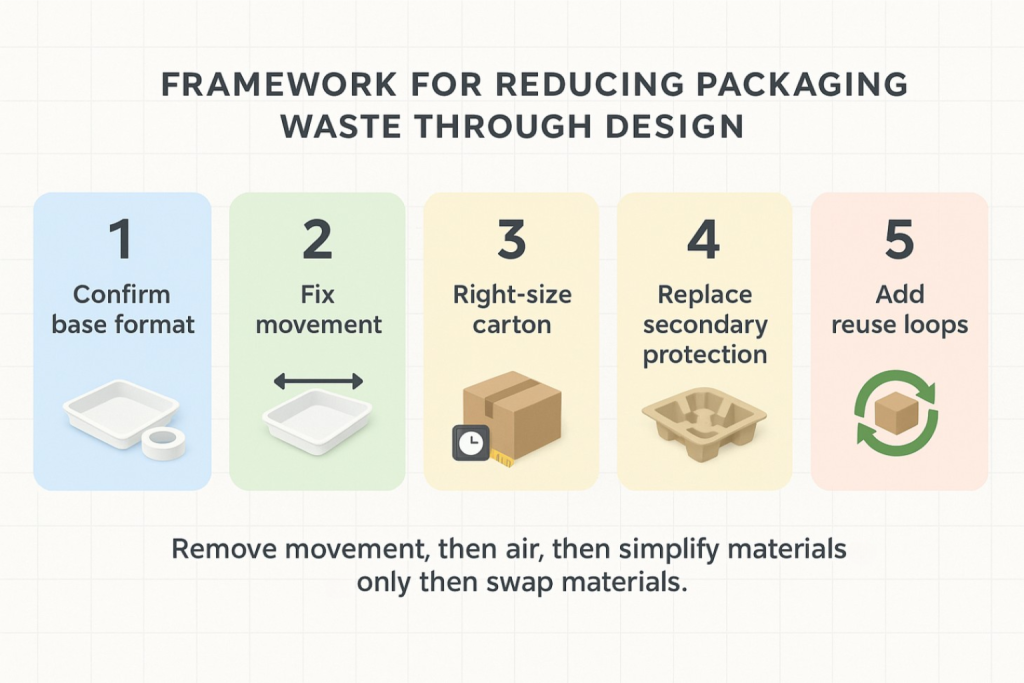
A short step-by-step framework for a safer packaging upgrade
- Confirm the base format (tray or tape-and-reel) and what the device needs during handling.
- Fix movement by improving fit and internal geometry, so you can remove filler.
- Right-size the carton so you reduce space and stabilise the load.
- Replace secondary protection with simpler, more recyclable formats where safe, such as moulded pulp inserts or cleaner fibre layouts.
- Where possible, add reuse and refurbishment loops for eligible items, because this can reduce consumption more than a single switch to “eco” materials.
This is a tight framework that is easy to defend internally because each step has a clear reason and a clear effect.
How Kitting Helps You Keep Packaging Consistent And Reduce Waste Over Time
Even a good pack-out can degrade through process drift. Someone adds an extra layer “just to be safe.” A shift packs differently. A new lane gets introduced, and the old carton size is reused even when it is wrong.
Kitting is one of the simplest ways to stop that drift because it turns the pack-out into a defined, repeatable unit. SuperPak describes kitting as assembling multiple individual items into a single kit or package to streamline operations, and lists benefits such as reducing errors and improving efficiency.
For semiconductor packaging, kitting supports sustainability because it reduces repacks, it reduces accidental missing items that trigger re-shipping, and it makes packaging use easier to track. Over time, tracking is what lets you keep cutting waste instead of watching it creep back.
When Reuse And Refurbishment Beat Single-Use “Eco” Packaging
If you are serious about reducing packaging consumption, reuse often delivers the biggest wins, as long as your logistics can support it.
SuperPak’s collection and washing service specifically describes the collection and refurbishment of shipper boxes and wafer rings from South Korea and Vietnam with aqueous washing for the semiconductor industry. That is a strong signal that reuse and refurbishment is not just nice idea. It is something that can be executed as an operational programme.
Reuse programmes succeed when you treat them like a controlled flow: define what gets returned, how it is identified, how it is washed, what gets rejected, and how you measure return rates. SuperPak’s page also mentions washing capabilities and facilities as part of this service.
If your largest packaging waste is coming from repeat shipments and high turnover of shipper materials, ask SuperPak whether a reuse and washing loop is practical for your lane and item types. It can reduce packaging consumption without forcing risky changes to the device-contact layer.
Common Mistakes That Make “Eco Packaging” Fail In Semiconductor Flows
The most common failure is starting with a material claim instead of a pack-out design. If your devices move inside the pack-out, you will keep adding layers, even if those layers are labelled “green.”
Another common failure is treating fibre-based packaging as universally safe. Fibre-based inserts can be excellent in the right layer, but if you have contamination controls, you need to design around particulate and handling requirements. SuperPak’s cleanroom packaging guidance highlights how packaging can introduce contamination risk and discusses the need for low-particulate materials and controlled handling practices.
The final common failure is calling something recyclable without building a pathway. If you cannot collect, sort, and process the packaging in your real flow, the label is not enough. This is why reuse and refurbishment, when practical, often deliver a more reliable outcome.
FAQs
Is moulded pulp suitable for semiconductor packaging?
It is often suitable as secondary or outer protection, especially when it stabilises trays or reel boxes inside a carton. SuperPak describes moulded pulp trays as being made from recycled paperboard or post-consumer newspapers and used for protective packaging, including electronics. If you operate with stricter contamination controls, keep fibre materials in the right layer and design the flow accordingly.
Should we use thermoformed trays or tape-and-reel?
Choose based on handling and the downstream process. SuperPak supports both thermoforming and tape-and-reel packaging, and describes tape-and-reel as using carrier tape pockets sealed with cover tape and wound onto reels for shipment. Trays often fit when you need precision presentation and stable stacking. Tape-and-reel often fits when automation and standardised feed are central to your process.
How do we reduce packaging without increasing damage risk?
Reduce movement first, then reduce air space, then simplify materials. SuperPak’s part fit analysis and simulation testing description emphasises ensuring accurate fit and functionality and minimising errors, which is the right foundation for removing filler and reducing overall material use safely.
What packaging items are realistic for reuse and refurbishment?
Typically, durable and standardised items where return logistics are feasible. SuperPak specifically references refurbishment of shipper boxes and wafer rings for the semiconductor industry with aqueous washing.
The practical takeaway
If you want biodegradable and recyclable packaging for semiconductor devices in Singapore that is realistic, defendable, and safe for high-value devices, focus on a system approach rather than chasing labels.
Start with the right primary format (thermoformed trays or tape-and-reel). Tighten fit and stability so you can remove filler. Right-size cartons so you reduce air and material. Use moulded pulp and fibre-based packaging where it fits best, mainly in secondary and outer layers. Then, where your logistics allow, consider reuse and refurbishment loops for high-impact items like shipper boxes and wafer rings.
Get SuperPak’s recommendation for your exact pack-out
If you want to improve sustainability without guessing, talk to SuperPak with a clear summary of your device type, volumes, handling requirements, and shipping lanes. SuperPak can recommend a practical pack-out using thermoformed trays or tape-and-reel, supported by cartons, moulded pulp inserts, and, where suitable, collection and washing programmes for reuse.
Reach out to request a quotation or their catalogue, and you will get guidance that is designed to reduce packaging waste while keeping protection and handling consistent.