
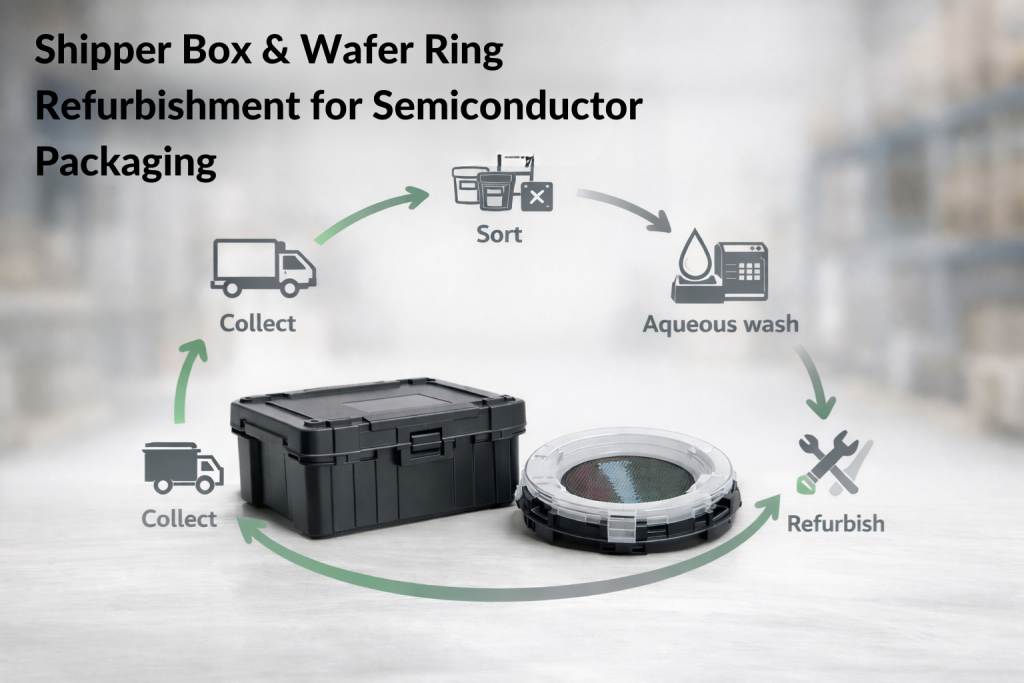
If you searched recycling shipper pods, you are likely trying to achieve something practical: reduce packaging waste without risking product quality, and avoid repeatedly buying replacement shipper items that could have been reused. The best programmes do not start with recycling. They start with a controlled loop where shipper items are collected, sorted, washed, refurbished when suitable, and only then routed for recycling when they can no longer perform safely.
This article focuses on the packaging meaning of “shipper pod” and ties it to what SuperPak explicitly provides: collection of packaging items for recycling and washing, including collection and refurbishment of shipper boxes and wafer rings from South Korea and Vietnam with aqueous washing for the semiconductor industry, supported by listed DI washing facilities and in-house laboratory equipment.
What Does “Recycling Shipper Pod” Mean In Packaging?
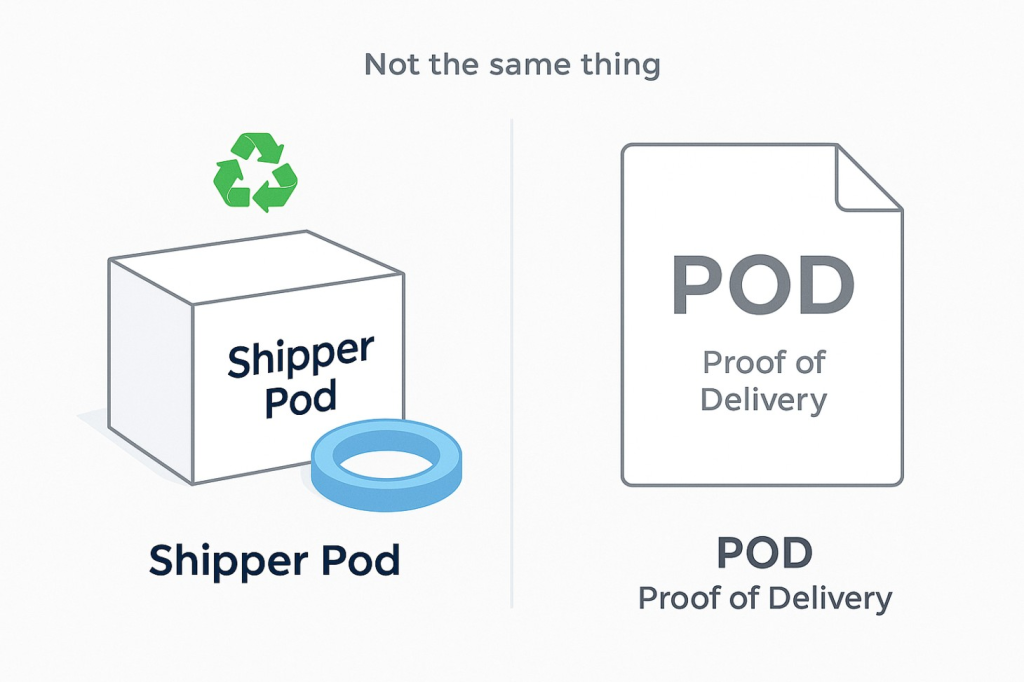
In day-to-day operations, people often use “shipper pod” as shorthand for a reusable shipper container, usually a shipper box used to protect parts during storage and transit. Different companies label these items differently, which is why you may see “shipper box” more often than “shipper pod” on supplier sites.
There is also a common reason search results can look irrelevant. In logistics, “POD” often means proof of delivery, which is a document or confirmation step, not packaging. If you are seeing delivery paperwork articles, that is not what you want.
In this guide, “recycling shipper pod” means setting up a real packaging loop that covers collection, washing, refurbishment, and recycling for items that are no longer suitable for reuse. To keep it specific and buyer-relevant, the examples focus on shipper boxes and wafer rings, because those are the items SuperPak explicitly references in its recycling and washing service description.
What Superpak Provides For Shipper Box And Wafer Ring Collection, Washing, And Refurbishment
SuperPak describes this as a contract manufacturing service it has been running for years: collection of packaging items for recycling and washing. They also give a concrete, high-signal example rather than a vague promise. SuperPak states that a key project they specialise in is collection and refurbishment of shipper boxes and wafer rings from South Korea and Vietnam with aqueous washing for the semiconductor industry, and they emphasise cleanliness and contamination prevention as part of the process.
For buyers, the most useful part is that the page lists specific facility capabilities, not just marketing language. SuperPak states its cleanroom DI washing facilities provide micro contamination cleaning services for multiple industries including semiconductor, and it lists washing capabilities such as aqueous machines with built-in vacuum ovens, washing lines, a DI plant, plus an in-house laboratory and named test equipment.
It also helps to know you are speaking to a partner that can cover more than a single task. SuperPak positions itself as a one-stop packaging partner offering support across design, production, kitting, logistics, and warehousing. Our services list includes manufacturing (such as thermoformed products and tape and reel products) and contract manufacturing services like kitting alongside recycling and washing.
If you are comparing suppliers, start by checking SuperPak’s service categories so you can see whether they can support your wider packaging needs, not just recycling shipper pod activities.
How A Recycling Shipper Pod Programme Works From Pickup To Return
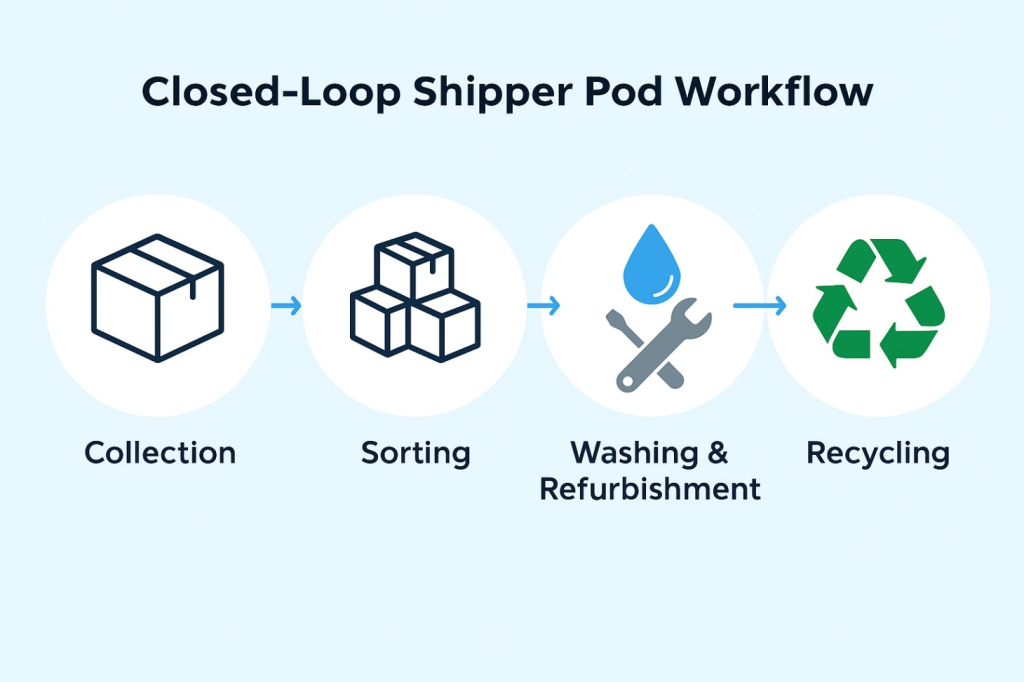
Most articles stop at “recycle it”. Real programmes have to survive daily operations, which means the workflow needs to be predictable. A good loop has four stages.
First, items are collected with basic tracking so you can reconcile what leaves your site and what returns. Second, items are sorted into clean returnables, quarantine items, and rejects, so uncertain items do not ruin the rest of the batch. Third, wash and refurbishment happens with a process that meets your cleanliness needs. Finally, rejects are routed out of the loop and handled separately so they do not keep reappearing.
This sounds straightforward, but the difference between a working programme and a constant headache is usually the discipline in the first two stages. If collection and sorting are vague, washing becomes expensive trial-and-error. If collection and sorting are clear, washing is repeatable, and your yield stabilises.
When Should You Wash And Reuse Instead Of Recycle?
Recycling feels like the responsible answer, but for high-cleanliness packaging, washing and reuse is often the more controlled and cost-effective first step, as long as it is safe. SuperPak’s example is framed around refurbishment for the semiconductor industry, which is exactly the kind of environment where cleanliness control matters.
A simple way to decide is to use three quick checks. You do not need a complex scoring model to start, but you do need consistency.
Condition: If an item is cracked, warped, or damaged in a way that affects protection, stacking, or closure, it is a poor candidate for reuse. Washing will not fix structural issues.
Contamination risk: If residue or exposure history is uncertain, treat it as quarantine until proven otherwise. If your process is sensitive, “looks clean” is not the same as “safe for reuse”.
Repeatability: If you cannot collect and sort reliably, the loop will not stabilise. A programme that works on paper but fails at the bin level will create more replacement buying, not less.
If two of these three checks are positive, reuse is usually worth piloting. If one or none are positive, route the item out of the reuse loop and focus your efforts on recycling or replacement planning.
How To Set Up Collection And Sorting That Stays Clean And Traceable
The biggest improvement you can make is to treat collection like a process with ownership, not a housekeeping task. You do not need a complicated system to do this well. You need a few clear rules that people can follow under pressure.
Start by assigning one owner, usually in operations, procurement, or quality. This person owns the rules and the weekly rhythm, even if another team arranges the physical pickup.
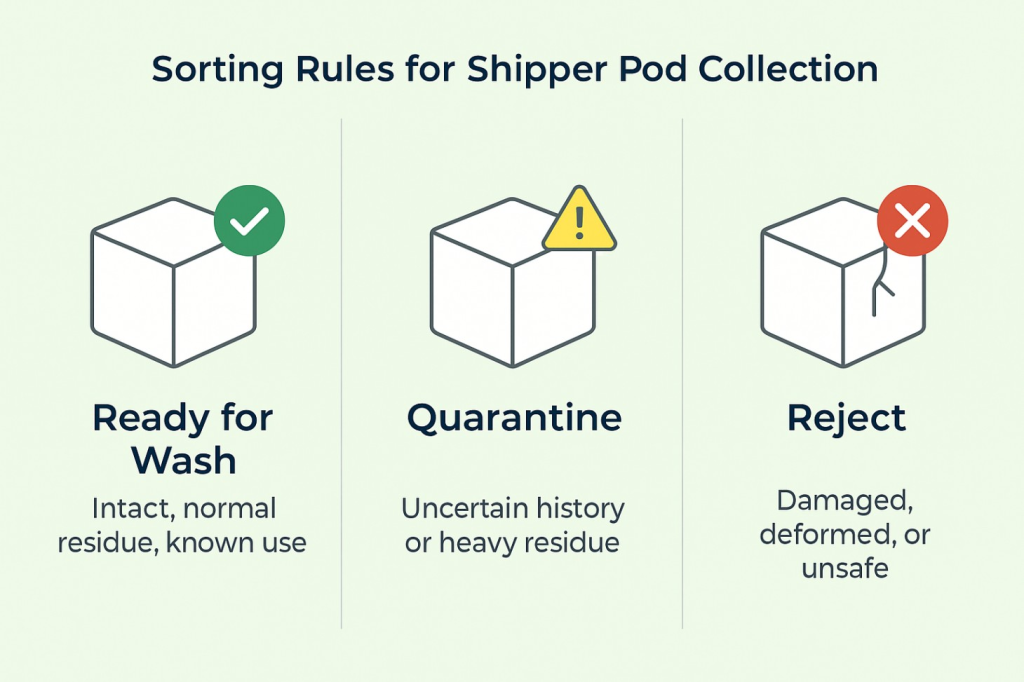
Then set source sorting rules that are easy to execute. In practice, three categories are enough:
- Ready for wash: intact, normal residue, known usage context
- Quarantine: uncertain history, heavier residue, mixed handling conditions
- Reject: clear damage, deformation, missing parts, or anything unsafe to return
This is one of the few places where a short bullet list is worth keeping because it makes the sorting decision fast and repeatable.
After sorting, record the minimum details that make the batch traceable. You do not need a fancy system. A simple batch record works as long as it is consistent: pickup date, site, item type, quantity, and a short condition note. Traceability is what allows you to improve over time. Without it, every reject becomes an argument and every yield drop becomes a mystery.
Finally, handle quarantine items deliberately. The most common failure pattern is mixing quarantine items into normal wash batches “just to see”. That approach usually increases rejects later and creates distrust in the programme. If you are serious about cleanliness, you need to protect the main flow by isolating uncertain items until they can be assessed or rejected.
SuperPak explicitly highlights maintaining high standards for cleanliness and preventing contamination in its cross-border shipper box and wafer ring refurbishment example, so aligning your collection discipline to that reality makes the service more likely to succeed for your use case.
When Should You Recycle A Shipper Pod Instead Of Washing And Reusing It?
Recycling becomes the right answer when reuse is no longer safe or repeatable. Most of the time, it is not a philosophical decision. It is a condition decision.
Recycle or route out of the reuse loop when items have structural damage, when contamination history is too uncertain to quarantine economically, or when the item no longer performs reliably after washing. In these cases, the best programme does not try to rescue every piece. It protects the quality of what returns to circulation.
One important point for a buyer-focused article like this is to avoid making claims about specific material recycling outcomes unless the supplier states them clearly. SuperPak states it provides collection for recycling and washing, but the service page does not claim that every polymer type or every condition will be accepted for recycling. Keep your internal expectations realistic and align recycling pathways with what your partner supports for your specific items.
How to evaluate a washing and recycling partner quickly
If you are shopping for a supplier, you do not need a full audit to get a useful signal. You need evidence that the partner can run a stable loop that protects your product and your process.
Use evaluation criteria that map directly to operational risk:
- Clear workflow: they can explain collection, sorting, washing, and rejection as a simple flow
- Segregation discipline: they prevent quarantine and rejects from contaminating normal batches
- Traceability: they can provide batch-level records from pickup to return
- Cleanliness capability: they can support your cleanliness needs, not just general cleaning
- Exception handling: they can explain what happens when a batch is heavily contaminated or damaged
This list stays short on purpose because it is a buying checklist, not a theory section.
Certifications can also support confidence, as long as you verify scope and validity. SuperPak publishes certification documents showing ISO 9001:2015 and ISO 14001:2015, with scope that includes manufacturing of vacuum forming trays and carrier tapes, trading of packaging products, manufacturing and supply chain of plastic and paper products, and manufacturing and contract manufacturing for multiple industries, plus validity dates into 2028.
A small pilot should be measured simply. These metrics are usually enough to decide whether to scale:
- Yield: percentage returned usable after washing and refurbishment
- Reject rate: percentage rejected, with top reasons
- Turnaround time: working days from pickup to return
- Consistency: whether results stay stable across multiple batches
What SuperPak Needs To Quote Accurately
A quotation becomes slow when inputs are vague. If you want SuperPak to respond with something you can actually act on, give a short summary that allows them to match process and capacity to your needs.
At minimum, include item types (shipper boxes, wafer rings), monthly volumes and peak periods, source locations, and your cleanliness expectations in plain language. If you operate across multiple sites, note whether items come from controlled areas or mixed environments, because that changes sorting discipline and risk.
If you can, include a few photos that show typical condition ranges. It helps align what “ready for wash” and “reject” looks like, and it reduces back-and-forth.
If you manage recurring packaging flows for semiconductor or high-cleanliness operations and want a stable take-back loop, send SuperPak a one-page summary with your lanes, volumes, and item photos. Ask them to recommend a practical pickup-to-return workflow and a pilot plan you can validate before scaling.
FAQs
How do we reduce contamination risk in a take-back loop?
Start with sorting discipline and quarantine rules. The biggest risk reduction usually comes from preventing unknown-condition items from entering normal wash batches.
How do we prevent sorting mistakes at the source?
Keep the rules simple and visible. Three categories, one owner, and a short weekly check-in beat a complicated system that nobody follows.
How do we decide if reuse is worth it?
Pilot the loop, then look for stable yield and predictable reject reasons. If yield swings wildly, the problem is often upstream handling and sorting, not the idea of washing itself.
What should we do with damaged or heavily contaminated items?
Reject early, keep them separate, and route them through the recycling path that fits your specific items and your partner’s confirmed handling. Do not let rejects circle back into the reuse stream.
Next step: Request a quote and validate the loop
A good recycling shipper pod programme is not about saying you recycle. It is about running a controlled loop that your operations team can execute and your quality team can trust. Collect, sort, wash, refurbish, and remove rejects early, so only stable, usable items return to circulation.
If you want one supplier who can support this loop and also cover broader packaging needs, SuperPak positions itself as a one-stop packaging partner across design, production, kitting, and contract manufacturing, with recycling and washing listed among its services.
If you want to stop guessing and set up a working loop, contact SuperPak and request a quotation for your shipper box or wafer ring collection and washing needs. Share your item types, volumes, source locations, and cleanliness expectations. Ask for a recommended pickup-to-return workflow and a small pilot plan you can validate before scaling.