
Which Choices Genuinely Cut Waste Without Raising Damage Or Cost In Singapore?
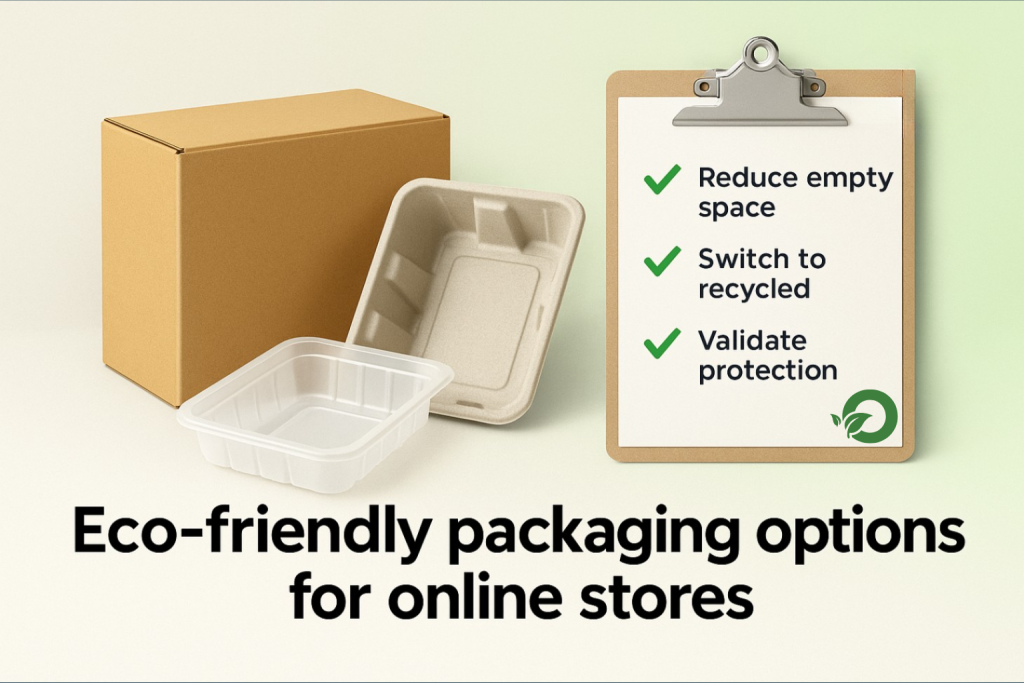
If you run e-commerce in 2025, packaging is no longer a back-room detail. It shapes landed cost, delivery experience, and sustainability reporting in one stroke. The practical opportunity is immediate and measurable. Choose eco-friendly packaging options for online stores that reduce space, switch to recyclable or recycled formats where sensible, and validate protection with simple transit tests before you scale.
In Singapore, online sales contribute a steady share of monthly retail value, so any improvement you make at the pack station repeats across thousands of parcels each quarter. The July 2025 monthly release reported retail sales of about $4.2 billion with online sales at around 13.1 percent, a persistent signal that e-commerce packaging choices affect a meaningful slice of trade every month. At the same time, national guidance has arrived for the e-commerce context. The new sustainable e-commerce packaging guidelines list practical “reduce, reuse, recycle” actions and include a scorecard teams can apply immediately without guesswork.
What Eco-Friendly Packaging Make Sense For Online Stores, And When Is Each The Right Call?
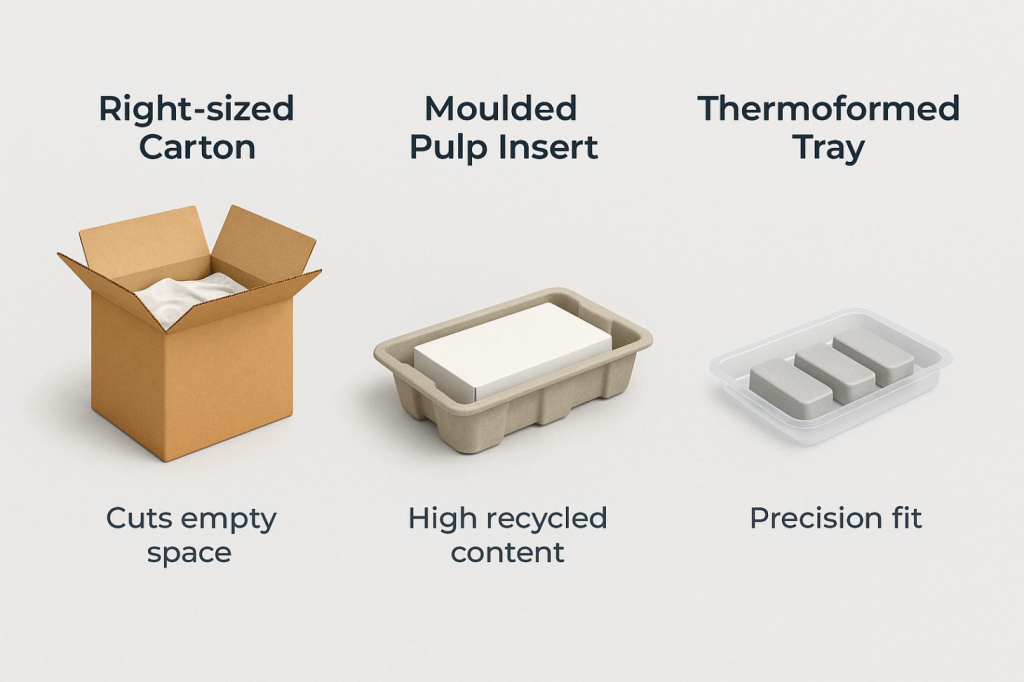
There is no single best material. Choose by product fragility, return rate, average order value, and the performance of your courier lanes. Three families cover most e-commerce situations in Singapore.
Molded pulp inserts for protection with high fibre content
Molded pulp, also called molded fibre, is formed from recycled paper and can often be recycled again after use. It takes complex geometries, offers stable nesting, and is a credible replacement for foam in many applications. In e-commerce, molded pulp inserts stabilise electronics, small appliances, and cosmetic sets, especially when you want stackability and a neat unboxing moment. If your parts require very fine features or higher edge crush resistance, pair pulp inserts with a snug outer carton and a short menu of box sizes to keep void to a minimum. For design options and sampling, start with SuperPak’s molded Pulp and request case-specific guidance.
Right-sized corrugated cartons to cut space and dimensional weight
Expanding your box-size menu is often the fastest lever. Right-sized cartons reduce filler, improve densification in vehicles, and lower dimensional weight charges. Teams frequently see double-digit reductions in space by adding small and slim formats and by writing simple decision rules into the pack-station SOP. Pair right-sized cartons with mono-material paper fillers where lanes allow, and capture a few pack-out photos per SKU so customer service can see how parcels are meant to leave the building. If you want design help, review SuperPak’s services hub and align cartons and inserts that work together. If you need a specialised format that is not listed online, contact SuperPak to scope it before you commit.
Thermoformed trays for precision fit and repeatable protection
When you have delicate parts, repeat orders, or kitted bundles, a custom thermoformed tray can be both sustainable and economical. A tray presents each component consistently, speeds packing, and prevents scuffing or mis-orientation that drives damage claims. In an e-commerce context, nest a thermoformed tray inside a shipper carton, then use paper-based fillers to remove the remaining void. Explore the Thermoformed Products pages to understand forming approaches and typical use cases across electronics, semiconductor, medical, and consumer items. Where you have line-side trays that return in closed loops, ask SuperPak to advise on reuse programmes for your context.
Which Eco-Friendly Packaging Options For Online Stores Are Feasible From A Singapore Provider Today?
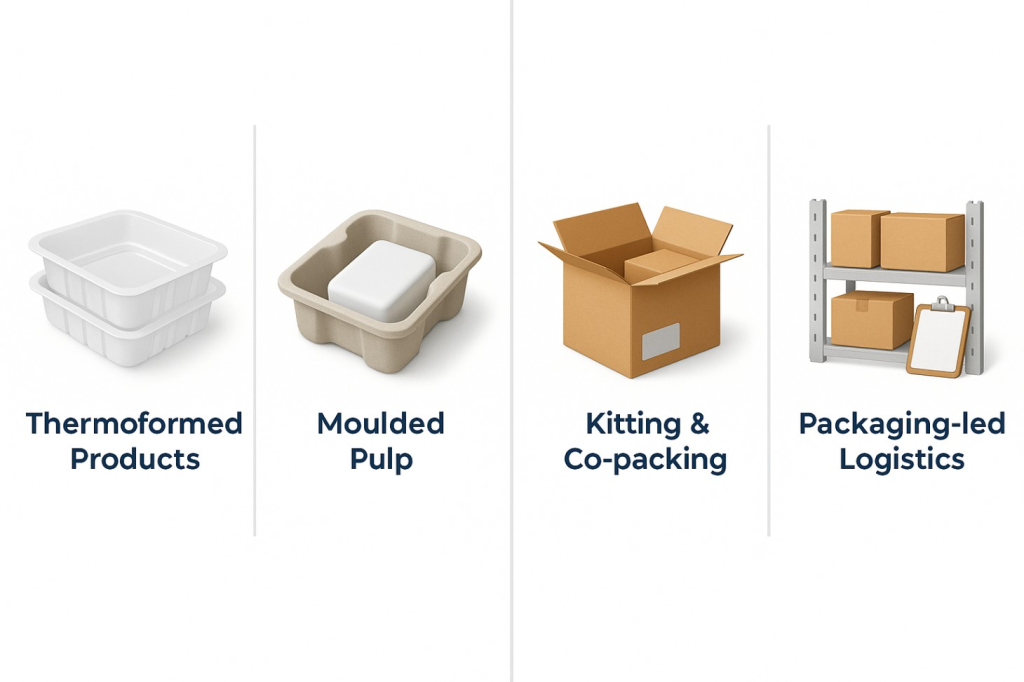
If you prefer to keep vendors few and accountable, work with one partner that publishes a clear scope for design, manufacture, and downstream fulfilment support in Singapore. SuperPak lists the following capabilities you can build on without assembling a patchwork of suppliers:
- Thermoformed products for custom trays and precision components in protective packaging workflows.
- Molded pulp for fibre-based protective inserts that replace foam in many e-commerce applications.
- Kitting and co-packing as contract manufacturing steps, so bundled SKUs leave correctly labelled and, where required, photo-documented. Start with Kitting for Medical Accessories and the long-form explainer on outsourcing kitting and packaging in Singapore.
- Packaging-led logistics and warehousing to align inventory, reduce over-pack, and improve turns. Read the 2025 buyer’s guide to Packaging Logistics and Warehousing for E-commerce.
If you require a material or certification not shown on the site, such as a specific compostable film or a specialised mailer grade, please contact SuperPak to confirm whether it is supported in your quantity and lane.
Which Sustainability Claims Should Online Stores Treat Carefully, And What Standards Keep Your Statements Credible?
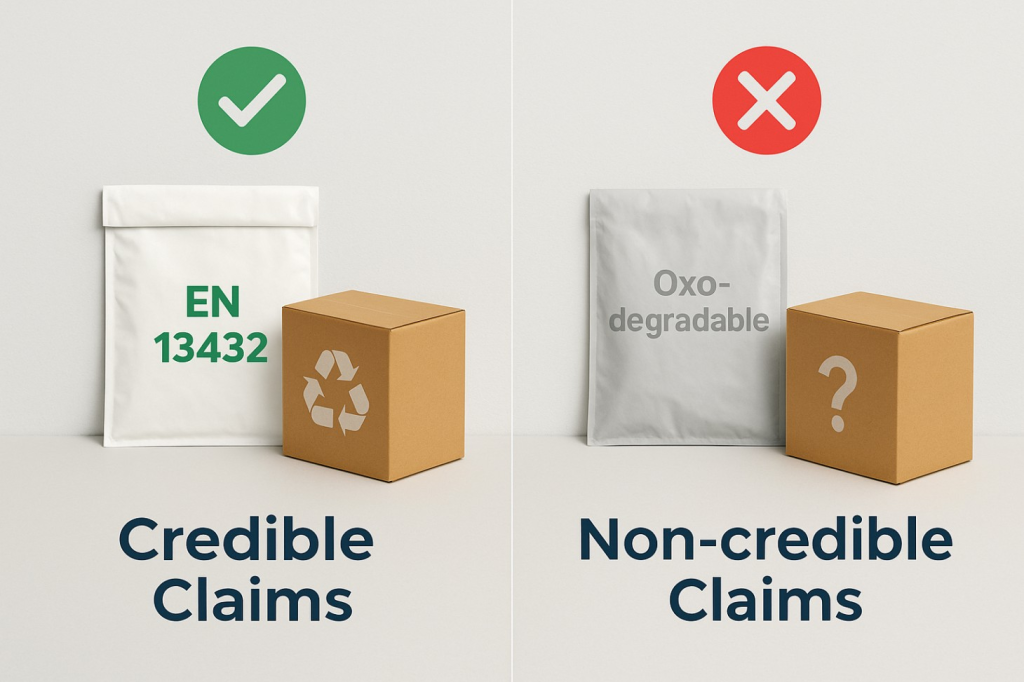
Two families of claims require careful wording because they depend on formal standards and local end-of-life conditions.
Compostable packaging requires industrial composting access
EN 13432 and ASTM D6400 are the recognised reference standards for compostable packaging. EN 13432 defines minimum requirements for packaging to be processed by industrial composting, including disintegration and biodegradation criteria under controlled conditions. ASTM D6400 sets labelling requirements for plastics designed to compost in municipal and industrial aerobic facilities where thermophilic conditions are achieved. These are industrial composting standards rather than home composting rules. If you want to use compostable mailers or liners, confirm industrial composting access in your market and name the standard correctly in customer-facing copy.
If you need help assessing options for your SKUs and lanes, contact SuperPak for assistance.
Avoid oxo-degradable plastics and related claims
Oxo-degradable plastics contain additives that fragment conventional polymers. They do not offer the environmental benefits implied by the name. In January 2024, a ruling applicable to the European Union market endorsed a prohibition on placing oxo-degradable plastic products on the EU market, noting the lack of proven benefits in open environments. Treat any supplier language that resembles oxo-degradable claims as a red flag during procurement checks.
How Should A Singapore-Based Store Align Packaging Choices With National Guidance In 2025?
Singapore’s Guidelines on Sustainable E-commerce Packaging are practical and written for real operations. The guidance includes concrete “reduce, reuse, recycle” measures for boxes, mailers, and fillers, a self-evaluation scorecard, and examples such as expanding the box-size menu to avoid oversized cartons and switching to lighter options where appropriate. Align your change programme to these steps so operations, sustainability, and finance have a shared language and a public reference.
If you want help mapping the guidelines to your pick, pack, and ship process, start a scoped discussion with SuperPak. Bring your top five SKUs by volume, damage rate, and return reason. SuperPak can help you decide where molded pulp or thermoformed trays make sense and where a simple box-menu expansion and paper fill will do most of the work. For a logistics lens on packaging decisions, the buyer’s guide to Packaging Logistics and Warehousing for E-commerce explains how packaging and storage interact in real facilities.
What Common Mistakes Derail Eco Packaging Upgrades And How Do You Avoid Them?
- Measuring only unit cost
A cheaper filler that raises damage or returns will cost more by month-end. Measure the chain, not the item. Track damage rate, empty space, pack time, and return reasons together. - Switching materials without right-sizing first
Paper padding will disappoint if you are shipping air. Expand the box menu, then test materials so filler is doing what it should. - Assuming compostable equals better for every market
EN 13432 and ASTM D6400 are industrial composting standards. If your market lacks access, you risk setting false expectations in your copy and on your labels. Where you cannot confirm industrial composting, prefer recyclable and recycled materials with clear disposal guidance. - Treating oxo-degradable claims as acceptable
The legal and scientific direction is clear. Avoid such claims and remove any similar wording from supplier proposals and product copy. - Skipping pilot tests
A two-week lab and live pilot prevents months of rework. Use a simple ISTA-style sequence to de-risk the change before rollout. - Under-specifying SOPs
The packers need photos and one-line rules, not essays. Write the minimum viable guide and keep it visible at the station.
How Should You Evaluate And Choose The Right Solution And Supplier For Sustainable E-Commerce Packaging?
Start with your SKU mix and lanes
Pick your top ten SKUs by volume and return rate. Group them by weight, fragility, and whether presentation matters on opening and on returns. If returns are frequent, your presentation needs to survive a second journey.
Decide on a primary path for each group
For soft goods, right-sized paper mailers and recycled paper fillers usually present the best balance of waste reduction and speed. For fragile kits, specify molded pulp or thermoformed trays inside snug cartons. For very delicate parts and medical items, discuss tray geometry, material thickness, and stackability with your supplier.
Select a partner who publishes the full scope you need
If you want fewer handoffs, choose a provider that lists design, thermoforming, molded pulp, kitting, and packaging-led logistics on one site. SuperPak publishes this scope in Singapore, with ISO 9001 and ISO 14001 credentials highlighted across recent content. You can start with Thermoformed Products, Molded Pulp, and the Packaging Logistics and Warehousing buyer’s guide to understand how the pieces fit together. If you need a specific feature that is not listed, contact SuperPak to verify.
Ask for proof, not adjectives
Request a short document pack for your pilot SKUs. Include drawings, fibre specifications, any available test reports, and a statement of materials for each SKU. When you run the pilot, ask for pack-out photos to keep training short and consistent.
Clarify change management and training
Good partners provide simple on-station guides, early-life checks, and quick adjustments to trays or inserts if packing is awkward. If you need managed kitting and co-packing to reduce over-pack or to present bundles neatly, SuperPak provides services in Singapore that you can scope quickly with your operations lead.
Plan inventory and lead times
Right-sized cartons and pulp inserts require updates to reorder points and shelf space. If you need warehousing or cross-dock support to smooth the transition, contact SuperPak to discuss packaging-led logistics so you can keep one accountable partner through the change.
Frequently Asked Questions (FAQs)
Is paper padding as protective as plastic air pillows for most parcels?
It depends on weight, fragility, and space. In many common parcels, paper filler performs as well or better when right-sizing removes excess air. Platform-scale shifts show it is viable at enormous volume when specifications and SOPs are correct. Run a short pilot on your lanes before a full switch so protection and customer experience remain stable.
What does an eco upgrade normally cost?
Right-sizing often lowers total cost within weeks because you reduce filler and DIM-related freight charges. Molded pulp or thermoformed inserts introduce tooling, but they pay back through lower damage, faster packing, and improved presentation. Measure damage, returns, and pack-time, not just unit price.
How scalable are these changes for peak season?
Right-sized cartons and paper fillers scale well if you write one-line rules and stock a rational box menu. Thermoformed trays scale once tooling is signed off. Kitting and co-packing can stabilise bundles and maintain presentation when order volume spikes. If you need managed support, SuperPak offers kitting services in Singapore that you can scope quickly.
How should we think about compliance and environmental claims?
Name standards when you must make a claim, and only where they apply. For compostables, state that the claim relates to industrial composting conditions and confirm local access before you print labels or add website copy. Avoid oxo-degradable claims entirely and screen supplier language for similar phrasing.
What Is The Bottom Line For Eco-Friendly Packaging Options For Online Stores In Singapore, And What Should You Do Next?
Packaging now shapes cost, customer experience, and sustainability reporting in one move, so it deserves a decision-grade plan rather than a list of materials. With steady online sales and clear national guidance, the low-risk path is to right-size cartons, prioritise fibre-based interiors where lanes allow, and validate protection with a short ISTA-style pilot. Treat compostable claims carefully because they depend on industrial facilities, and avoid oxo-degradable language altogether. Measured this way, eco-friendly packaging options for online stores become a practical lever for cost, waste, and brand trust rather than a speculative exercise.
If you prefer one accountable partner in Singapore, start by reviewing Thermoformed Products and Molded Pulp to shortlist fit-for-purpose interiors, then align storage and throughput using the Packaging Logistics and Warehousing buyer’s guide. Share your top SKUs, damage reasons, and current box menu to scope a 30-day pilot that proves protection, cost, and training fit in real orders. When you are ready to move, contact SuperPak to confirm specifications and schedule a start date that keeps your next peak season on track.